Booking choice: The full day with lunch, from $164 per person. Check dates Tour details
Order a Chianti in a Florence trattoria and you might get either. The word covers a wide family of Tuscan reds, from the everyday carafe to the estate bottle aged for years, and the label is where the difference shows. Chianti Classico comes from the old heartland between Florence and Siena and carries the Black Rooster. Chianti comes from a much larger spread of hills around it.
Below: the difference in one table, the Black Rooster, the zone, the Sangiovese rules (including the 2026 changes to Chianti), the three Classico types, the UGAs, the Chianti subzones and the history that split one name into two wines.
The quick answer
Chianti Classico and Chianti are two different DOCG wines. Chianti Classico comes only from the 71,800 hectare zone between Florence and Siena, uses at least 80% Sangiovese and shows the Black Rooster on every bottle, says its consortium. Chianti comes from a wider area with looser rules. The full day with lunch tastes at three wineries in the Chianti Classico region, from $164 per person.
What is the difference between Chianti and Chianti Classico?
Two wines, two zones, two sets of rules. Chianti Classico is made only in the original Chianti heartland between Florence and Siena. Chianti DOCG is made in a far larger area of Tuscan hills around it.
Each has its own consortium: the Consorzio Vino Chianti Classico for the Black Rooster wine, and the Consorzio Vino Chianti for Chianti DOCG. Their rules differ on the grapes, the zone, the types and the seal on the bottle.
| Chianti Classico DOCG | Chianti DOCG | |
|---|---|---|
| Where | 71,800 hectares between Florence and Siena | A wider sweep of Tuscan hills, with subzones |
| Sangiovese | At least 80% | 70% to 100% on the consortium page; a 60% floor under the 2026 revision, per the trade press |
| White grapes | None since 2006 | Up to 10% |
| On the bottle | The Black Rooster | No Black Rooster |
| Types | Annata, Riserva, Gran Selezione | Chianti, Riserva, Superiore, a subzone name |
| Colors | Red only | Red, and rosé under the 2026 rules |
| Consortium | Consorzio Vino Chianti Classico | Consorzio Vino Chianti |
Sources: the two consortia, Wikipedia for the Black Rooster and Superiore, and the trade press for the 2026 revision of Chianti DOCG, covered further down.
Neither is a lesser version of the other. They are different wines, and the one you prefer is the one to buy.
How do you recognize a bottle of Chianti Classico?
Look for the Black Rooster, the Gallo Nero. Every bottle of Chianti Classico carries it on the neck or on the back label, says the consortium, and only Chianti Classico may show it.
The consortium calls the Black Rooster a unique trademark that stands for the long history of the original wine territory. Wikipedia adds that the seal is reserved for Chianti Classico; a plain Chianti never carries it.
Two more clues on the bottle:
- The words on the label. Chianti Classico, often followed by Riserva or Gran Selezione.
- The government seal. Chianti Classico is a DOCG, and the consortium says each bottle carries a distinctive Government Seal that identifies it, with production checked from vineyard to bottle by Valoritalia, an independent certification body.
Every step must happen inside the zone. The consortium's rule is that all phases, from the vineyard to the bottle, take place within the Chianti Classico territory.
Where is the Chianti Classico zone?
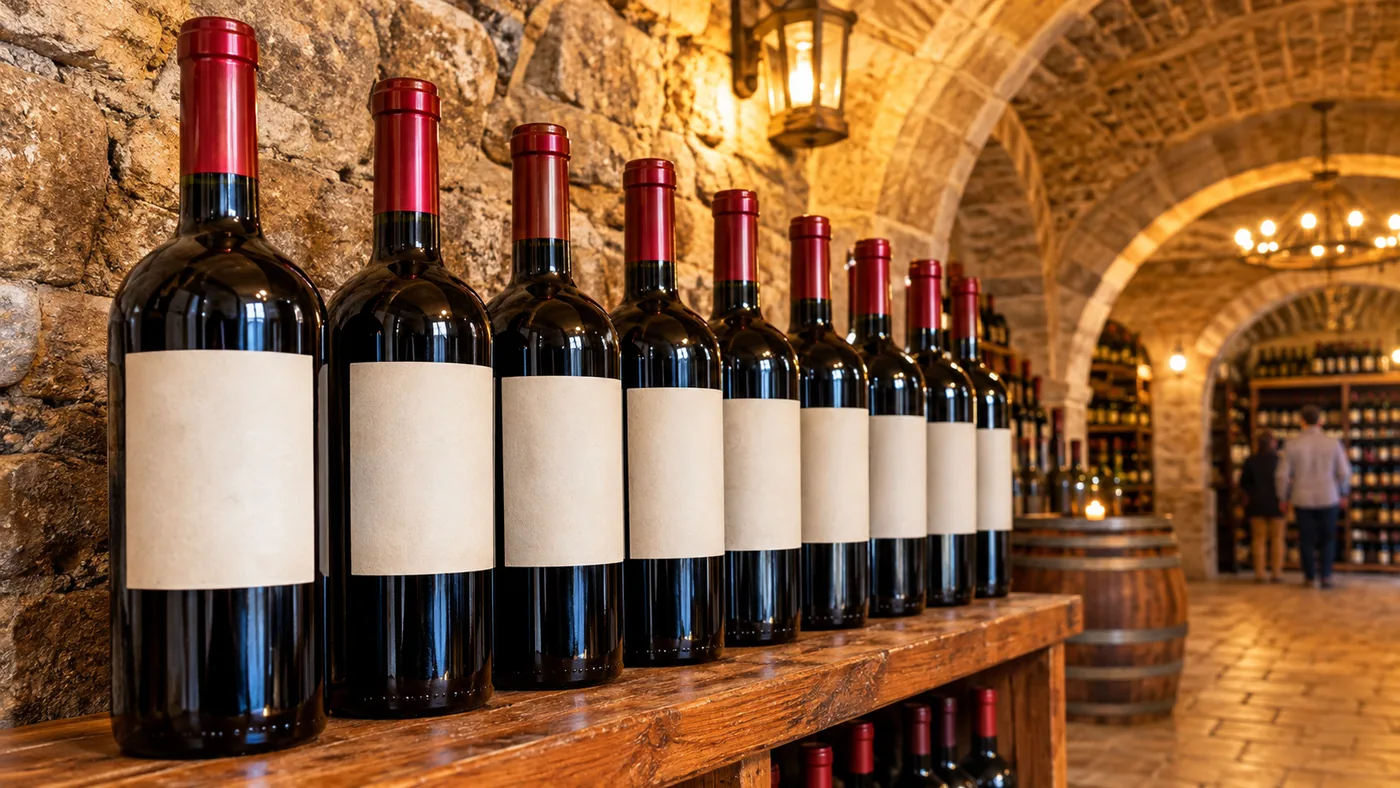
Between Florence and Siena. The zone covers 71,800 hectares (177,500 acres) in the two provinces, says the consortium, with four towns wholly inside it.
The consortium lists the whole territory of Castellina in Chianti, Gaiole in Chianti, Greve in Chianti and Radda in Chianti, plus parts of Barberino Tavarnelle, Castelnuovo Berardenga, Poggibonsi and San Casciano Val di Pesa.
Florence and Siena are the two cities at either end, and the consortium calls them the territory's capitals, but neither is a Chianti Classico village. San Gimignano and Monteriggioni lie outside the zone as well. San Gimignano has its own white wine, Vernaccia di San Gimignano.
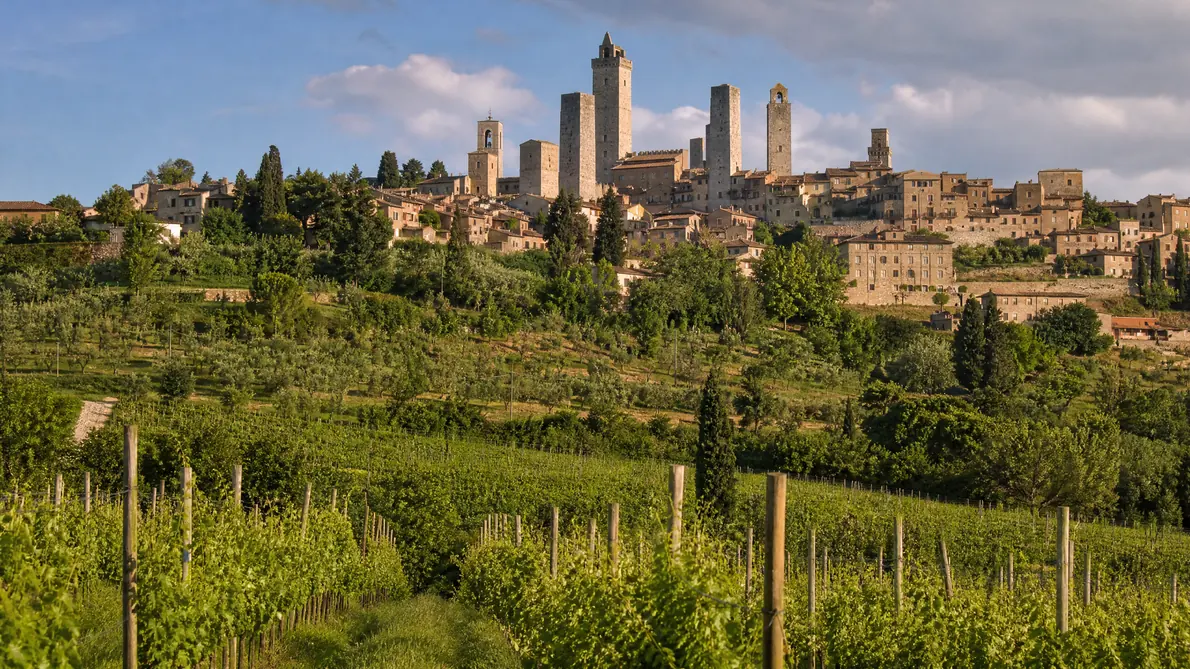
That matters when you pick a tour. The full day with lunch spends its free time in Greve in Chianti, and the tour from Siena stops in Castellina in Chianti. The tour with San Gimignano heads west to wineries near the towers, where the tastings include Vernaccia di San Gimignano, per the listing.
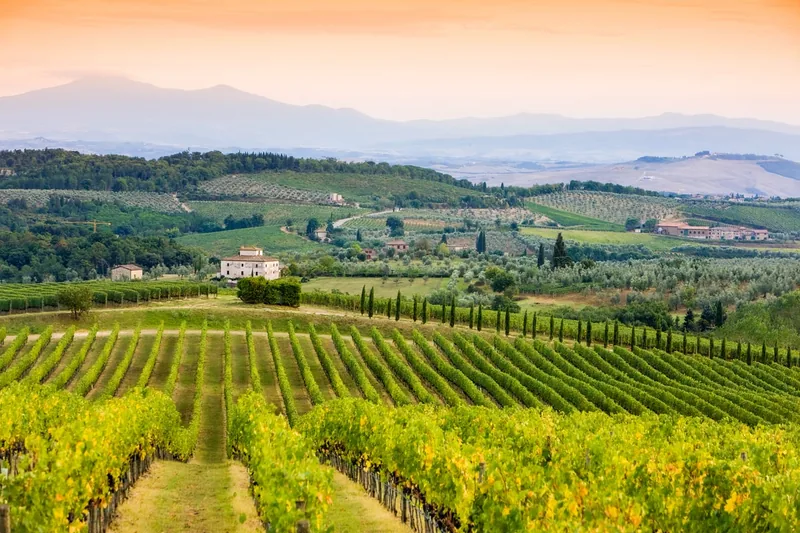
Three wineries in the Chianti Classico region, a Tuscan lunch and free time in Greve in Chianti, in a small group.
Explore the full day with lunch Tour detailsIs Chianti just Sangiovese?
Mostly. Chianti Classico needs at least 80% Sangiovese and may be 100%. Chianti DOCG has had a lower floor, and a 2026 revision lowers it again.
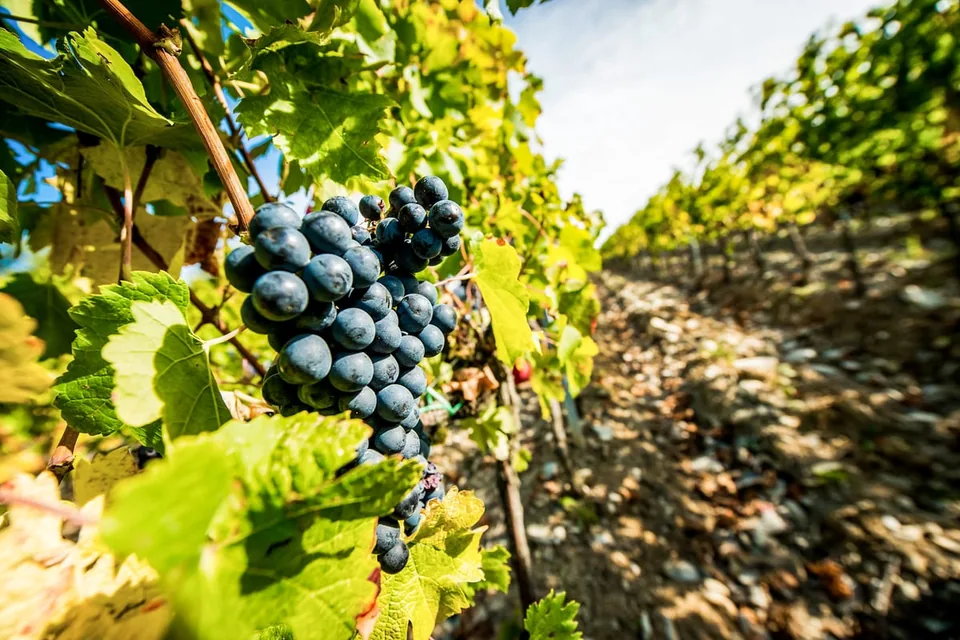
Chianti Classico. At least 80% Sangiovese, with up to 20% of other red grapes, says the consortium. A pure Sangiovese has been allowed since 1996, and since 2006 only red grapes may go in. The blending grapes it names are natives such as Canaiolo Nero, Ciliegiolo, Colorino, Fogliatonda, Malvasia Nera, Mammolo and Pugnitello, and the international Cabernet Franc, Cabernet Sauvignon, Merlot and Syrah.
Chianti DOCG. The Consorzio Vino Chianti's own rules page, as of 17 November 2026, gives 70% to 100% Sangiovese, up to 30% of other Tuscan grapes, white grapes at most 10%, and Cabernet Franc and Cabernet Sauvignon together at most 15%. The trade press reports a revision: Wine Drinker described the proposal in May 2026, and Vinetur wrote on 5 November 2026 that the EU had approved the new rules, which lower the Sangiovese floor to 60%. Expect labels to follow over the coming vintages.
Sangiovese owes its lead role partly to Baron Bettino Ricasoli, who set it as the dominant grape in the late 19th century, according to Wikipedia. Are Chianti and Sangiovese the same thing, then? No. Sangiovese is the grape; Chianti is a wine from a place, made mostly from it.
What are the three levels of Chianti Classico?
Annata, Riserva and Gran Selezione. Each step asks for longer aging and more alcohol, and Gran Selezione also for more Sangiovese and estate grapes only.
The consortium sets them out like this:
| Type | Sangiovese | Minimum aging | Minimum alcohol | Also |
|---|---|---|---|---|
| Annata | At least 80% | 12 months | 12% | The everyday Chianti Classico |
| Riserva | At least 80% | 24 months, 3 of them in bottle | 12.5% | Oak must support, not dominate |
| Gran Selezione | At least 90%, the rest native red grapes | 30 months, 3 of them in bottle | 13% | Estate grapes only; may name a UGA |
Gran Selezione arrived in 2014. The consortium calls it the first new type in Italian wine law to be placed at the top of the qualitative pyramid of a denomination, made only from the winery's own grapes.
Is Chianti a light or a heavy wine? The consortium describes the Annata as fruity, fine and easy to drink, the Riserva as fruity with oak that supports its structure, and the Gran Selezione as fruity, spicy and enveloping. Light to medium for the first, fuller as you climb.
What are the UGAs on a Chianti Classico label?
Eleven named areas inside the zone, the Unita Geografiche Aggiuntive. A Gran Selezione may print one on the label; it is optional.
The consortium lists the 11 UGAs as San Casciano, Greve, Montefioralle, Lamole, Panzano, Radda, Gaiole, Castelnuovo Berardenga, Vagliagli, Castellina and San Donato in Poggio. Decanter reported that the change was announced in Italy's Gazzetta Ufficiale on 1 July 2023, for Gran Selezione wines.
The idea is simple: tell the drinker where the grapes grew, village by village. A Gran Selezione from Panzano can now say Panzano. For a visitor the names double as a map, since most of them are villages you can drive through.
Our guide to the best towns in Chianti covers the villages themselves.
The top-rated half day: two Chianti Classico estates, cellar tours, wine, olive oil and local produce.
Check dates for the small-group tasting tourWhat are the Chianti subzones and Chianti Superiore?
Chianti DOCG has subzones whose names can go on the label, and a stricter Superiore. Neither applies to Chianti Classico.
The Consorzio Vino Chianti lists seven subzones: Colli Aretini, Colli Fiorentini, Colli Senesi, Colline Pisane, Montalbano, Rufina and Montespertoli. A wine that names one must be grown, made and bottled there. The 2026 revision adds an eighth, Terre di Vinci, around the birthplace of Leonardo, report Meininger and Vinetur.
Chianti Superiore is a Chianti made to stricter rules, and Wikipedia notes that Chianti Classico can never be labeled Superiore.
Is Chianti just red wine? Chianti Classico is, since only red grapes are allowed. Chianti DOCG now has a rosé category as well: Meininger reports that the new rules were published in Italy's official gazette on 13 June 2026, and that a Chianti rosé may not be sold in the traditional straw-covered fiasco.
Why is it called Chianti Classico?
Because it comes from the original Chianti. The first wine area by that name lay around Gaiole, Castellina and Radda, and the 1716 edict fixed its boundaries.
The story, from Wikipedia and the consortium:
- The Middle Ages. The Lega del Chianti groups the villages of Gaiole, Castellina and Radda.
- The 1716 edict. Cosimo III de' Medici, Grand Duke of Tuscany, fixes the boundaries of the Chianti area, called the first legal document in the world to define a wine production area.
- Late 19th century. Bettino Ricasoli sets Sangiovese as the leading grape.
- 14 May 1924. Producers found the consortium in Radda in Chianti, under the Black Rooster.
- 1932. The Chianti area is redrawn into seven sub-areas. The old heartland becomes Classico, and villages added to it take "in Chianti" in their names; Greve became Greve in Chianti in 1972.
The best way to learn the difference is to taste it. The sample menu of the three-towns day pours Chianti and Chianti Classico with lunch, and the coach tour promises to explain what it takes to be classified as Chianti Classico in the first cellar.
San Gimignano, Monteriggioni and Siena with one Chianti winery, three wines and a three-course lunch.
Check dates for the three-towns dayFrequently asked questions
Is Chianti Classico better than Chianti?
They are different wines rather than better and worse. Chianti Classico has the stricter rules (at least 80% Sangiovese, a single zone, the Black Rooster); which one you prefer is a matter of taste.
What does the Black Rooster on a bottle mean?
It is the trademark of Chianti Classico. The consortium says every bottle of Chianti Classico carries it on the neck or the back label, and only Chianti Classico may show it.
Is Chianti just Sangiovese?
Mostly. Chianti Classico is at least 80% Sangiovese and can be 100%. Chianti DOCG allows more other grapes, and its 2026 revision lowers the Sangiovese floor to 60%, per the trade press.
What are the three levels of Chianti Classico?
Annata, aged at least 12 months; Riserva, at least 24 months; and Gran Selezione, at least 30 months, from estate grapes and at least 90% Sangiovese, per the consortium.
Ready to book
Choose your tour
Free cancellation up to 24 hours before on every option. Prices are from-prices in USD and move with the season.
Small-Group Day to 3 Chianti Wineries with Lunch
- Air-conditioned vehicle with Wi-Fi
- English-speaking driver and guide
- Guided visits to 3 wineries
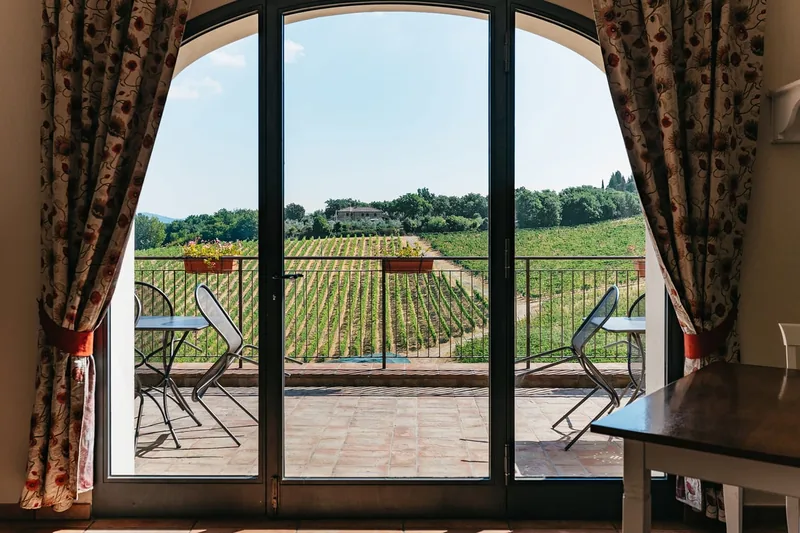
Small-Group Chianti Wine Tasting Tour from Florence
- Air-conditioned minibus from Florence
- Driver and guide
- Guided visits to 2 wine estates
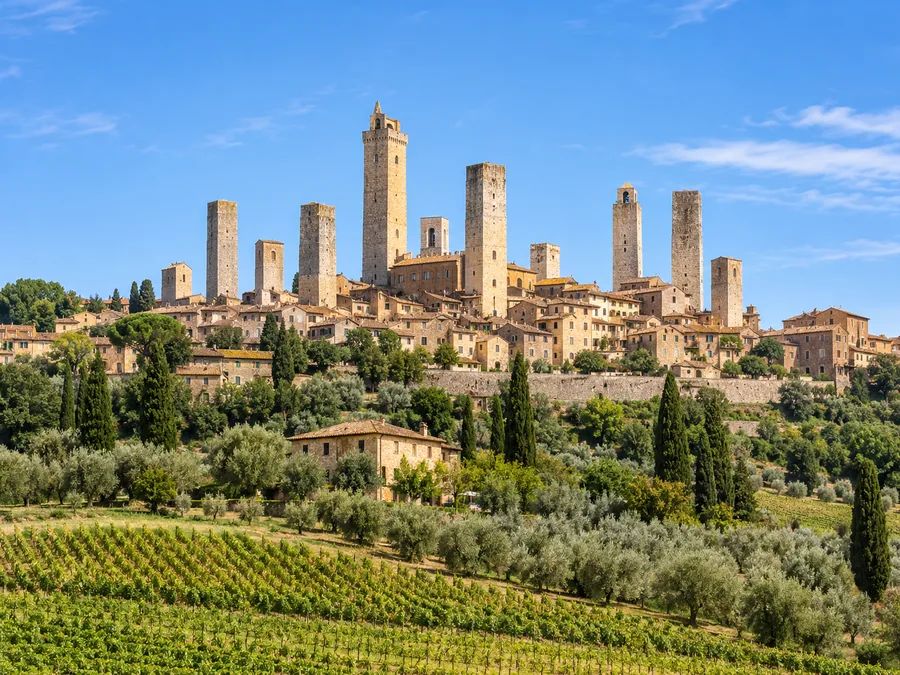
San Gimignano, Siena & Chianti Day Trip with Lunch
Three Tuscan towns and one Chianti winery in a day