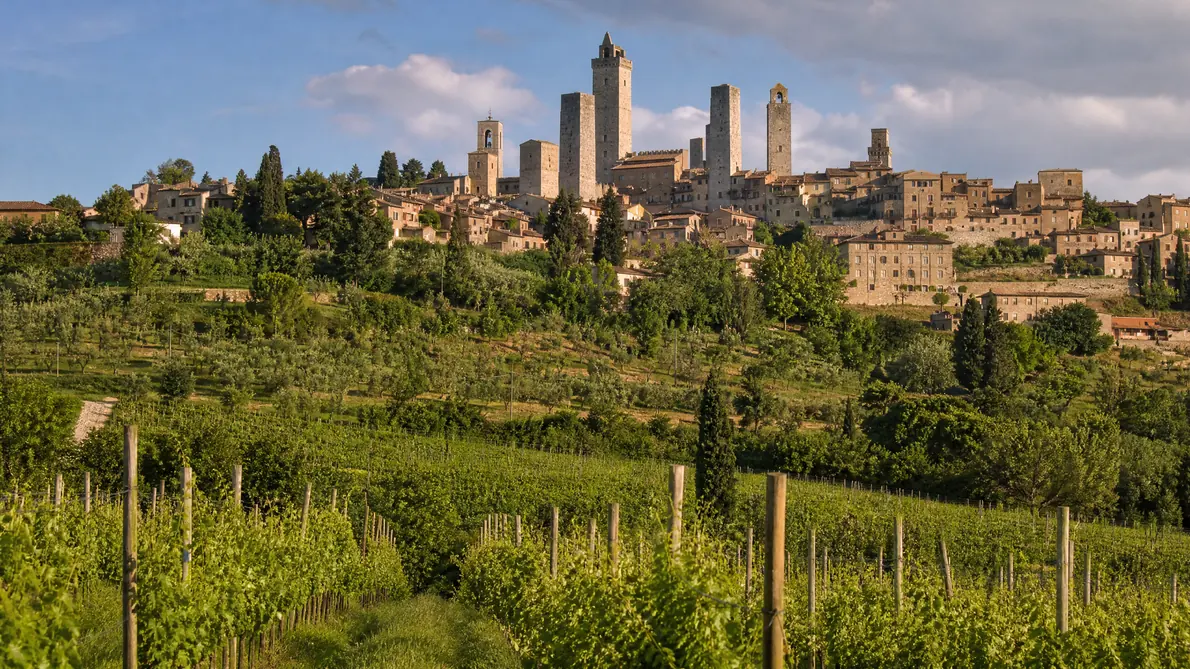
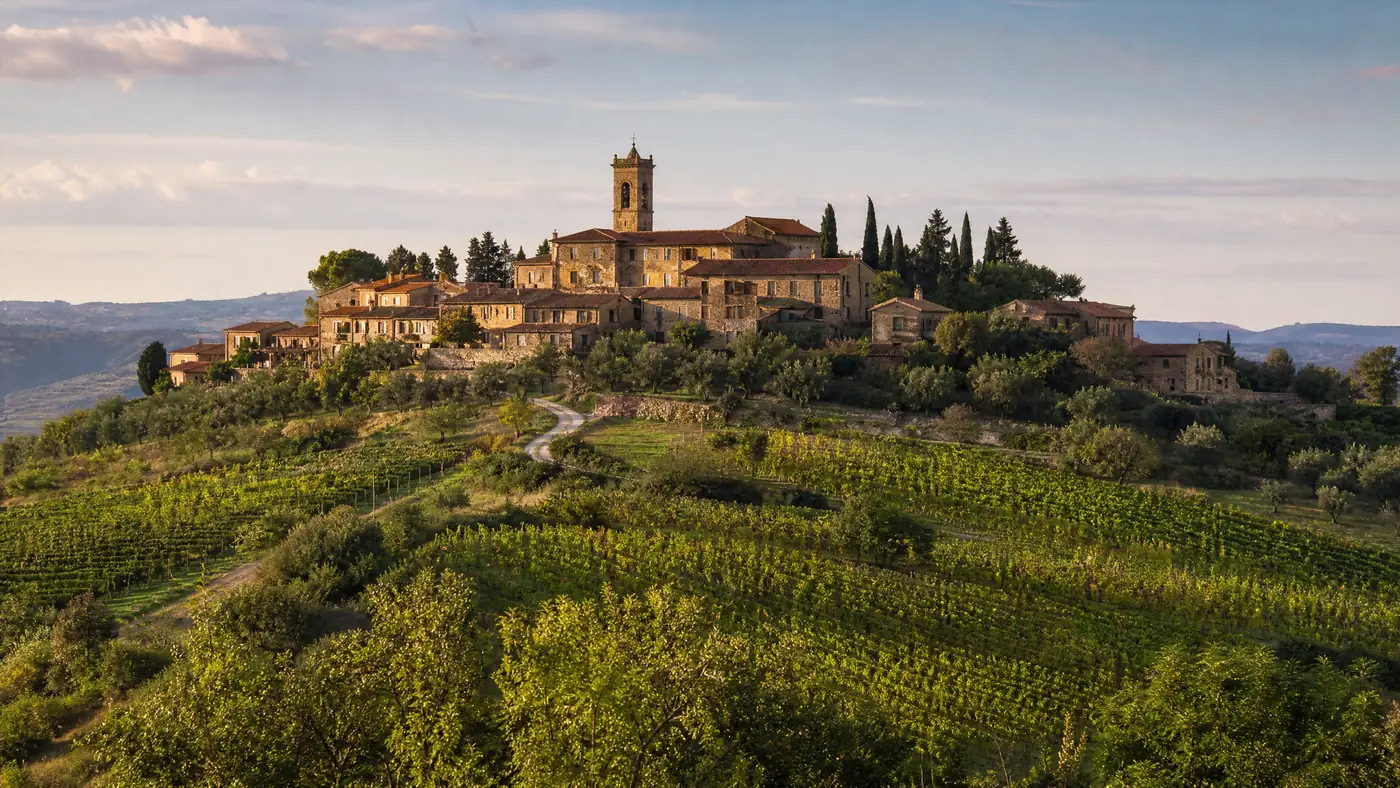
Booking choice: The full day with lunch, from $164 per person. Check dates Tour details
Four comuni lie wholly inside the Chianti Classico zone, per the Consorzio Vino Chianti Classico: Castellina, Gaiole, Greve and Radda in Chianti. Parts of Barberino Tavarnelle, Castelnuovo Berardenga, Poggibonsi and San Casciano Val di Pesa make up the rest of its 71,800 hectares between Florence and Siena. Every town below sits in that zone.
Below: Greve and its square, Panzano and the Conca d'Oro, Castellina and Radda on their ridges, the castles around Gaiole, three smaller places worth a detour, why San Gimignano and Siena are a different trip, and a table of which tours stop where.
The quick answer
For a first visit, Greve in Chianti: the principal town of the wine district, about 31 km south of Florence, with a triangular square where a market has run for centuries. Radda and Castellina give you the hill-town views, Panzano the vineyards of the Conca d'Oro, Gaiole the castles. The small-group full day builds in free time in Greve.
Which Chianti town is best for a first visit?
Greve in Chianti. It is the principal town of the wine district, the closest of the big four to Florence, and the one most tours pass through.
Wikipedia calls Greve the principal town of the Chianti wine district, the hills that run south of Florence to just north of Siena. It lies about 31 km south of Florence and 42 km north of Siena, down in the valley of the small river that gives it its name. That makes it the easy first stop: the main square, the shops and the cafes all in one flat place.
The others ask for a little more driving, and pay you back in views. Castellina and Radda sit up on ridges, at 578 m and 530 m, each about 35 km from Florence and 15 km from Siena. Panzano is part of the comune of Greve, a short way south. Gaiole lies further east, in castle country.
Our pick, by mood:
- A first look and a coffee in the square: Greve in Chianti.
- Views over the vineyards: Panzano and its Conca d'Oro.
- A stone hill town with history: Radda in Chianti, then Castellina in Chianti.
- Castles on a country road: the drive around Gaiole in Chianti.
The small-group full day: three Chianti wineries, a Tuscan lunch and free time in the square of Greve in Chianti.
Check dates for the full day with lunchWhat is Greve in Chianti known for?
Its triangular square, Piazza Matteotti, where a market has run for centuries, and the Chianti Classico wine fair the town holds there every September.
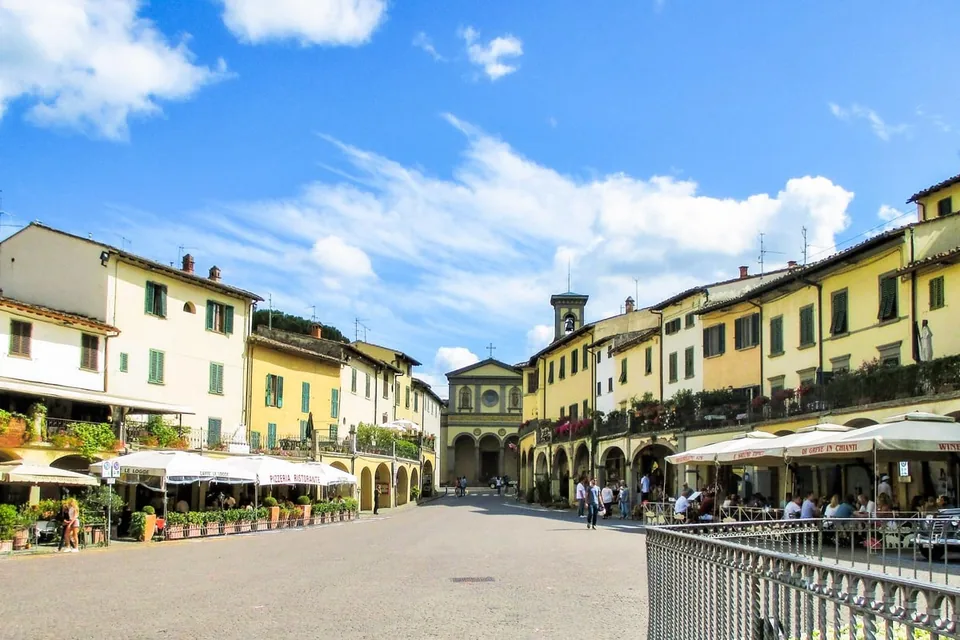
The heart of Greve is the triangular main piazza, with its arcades and medieval fronts. Wikipedia notes that a market has run there more or less continuously for centuries, serving the castles and hamlets around it. On the square stand the church of Santa Croce, rebuilt in 1325 after the town was burned, with paintings of the school of Fra Angelico, and a monument to the navigator Giovanni da Verrazzano. The castle of Verrazzano is 2 km from the center, on its own hill.
The name is newer than the town. It was plain Greve until 1972, when it became Greve in Chianti after the area joined the Chianti wine district. Food is half the visit: Wikipedia names the Macelleria Falorni as one of the oldest butcher shops in Italy, and the Cinta Senese pig as a breed of this region.
Every year on the second weekend of September, the comune holds the Expo del Chianti Classico in Piazza Matteotti, per Visit Tuscany, the region's official tourism site. The 2026 edition ran from 10 to 13 September.
On a tour: the small-group full day gives you free time to walk the square and the artisan shops, and the sunset tour lists a short photo stop in Greve. The pasta class meets near Greve, on Via del Palagione.
Is Panzano in Chianti worth a stop?
Yes, for the views. Panzano looks over the Conca d'Oro, a bowl of vineyards and olive groves, and keeps the walls of a castle documented since the 11th century.
Panzano belongs to the comune of Greve. Visit Tuscany describes a village crowned by its castle, documented since the 11th century and badly damaged after the Battle of Montaperti in 1260. Large stretches of the medieval walls survive, and from them you look straight down into the Conca d'Oro: a valley of vine rows, olive groves and woods.
Walk out to the Pieve di San Leolino, a parish church known from the 10th century per Wikipedia. It stands on a hill above the vineyards and keeps a 13th-century panel by Meliore di Jacopo inside.
Wine people know the name from the label. Panzano is one of the eleven UGAs, the Additional Geographic Units that the Consorzio Vino Chianti Classico has drawn inside the zone, and the consortium names the Conca d'Oro as the best-known area on its western side. In September the village hosts Vino al Vino, on the third weekend of the month, with tastings in Piazza Bucciarelli, per Visit Tuscany.
Castellina or Radda in Chianti: which hill town should you see?
Both if you can, since they are close. Castellina has its fortress and Etruscan tombs, Radda its medieval square and the palace of the old podestà.
Castellina in Chianti sits at 578 m, about 35 km south of Florence and 15 km northwest of Siena, between the valleys of the Arbia, Pesa and Elsa. It became a stronghold in the early 15th century, and the Rocca, with its huge 14th-century tower, still stands and houses a small Etruscan museum. Walk the Via delle Volte, a covered street inside the walls, and look for the Montecalvario mound outside town: four Etruscan tombs of the 7th and 6th centuries BC, per Wikipedia.
Radda in Chianti sits at 530 m, about 35 km southeast of Florence and 15 km north of Siena. Visit Tuscany calls it the old capital of the Lega del Chianti, the medieval league of Gaiole, Castellina and Radda that first gave Chianti its borders. The 14th-century Palazzo del Podestà on Piazza Ferrucci has been the town hall since 1865, its front covered in the coats of arms of the men who governed here. The former monastery of Santa Maria in Prato now holds the Casa del Chianti Classico, a wine exhibition space, and the castle village of Volpaia lies just outside town.
On a tour: the Chianti and castles tour from Siena starts its day in Castellina in Chianti, with free time to look around, per its listing. As of 17 November 2026, the comune of Castellina lists its Autunno a Castellina programme of local culture, traditions and food from 14 to 28 November.
From Siena: Castellina in Chianti, Monteriggioni and two Chianti wineries, in a minivan of up to eight guests.
Check dates for the tour from SienaWhat is there to see around Gaiole in Chianti?
Castles. The old Chianti road out of Gaiole passes Meleto, Brolio (the castle of the Ricasoli family) and the abbey of Coltibuono, now a wine estate.
Gaiole is one of the four comuni wholly inside the Chianti Classico zone, and with Radda and Castellina it made up the first Chianti, the medieval league. Visit Tuscany maps a castle drive of 32 km on the SS 408, the old Chianti road:
- Meleto Castle. Built in the late 12th century, two kilometres before Gaiole, with a small theatre the Ricasoli family used for opera and concerts.
- Brolio Castle. First built in 1009, on the old border between Florence and Siena, and rebuilt after 1484. In the 1800s Baron Bettino Ricasoli redid the interior in Neo-Gothic style. He is the same baron who set Sangiovese as the main grape of Chianti in the late 19th century.
- Coltibuono. A monastery from 1037 run by Vallombrosan monks, sold at auction after 1810 and now a winery and farm, 5 km of woods above Gaiole.
Gaiole is also where L'Eroica was born in 1997, the vintage bike ride on the white gravel roads. The organizers list the next edition for 3 October 2027.
No tour on this site makes Gaiole its stop, so this is the corner to see by car or by bus. Autolinee Toscane runs the extra-urban Gaiole-Radda-Greve-Firenze lines; check the Autolinee Toscane timetable before you go.
Which small Chianti villages are worth a detour?
Montefioralle above Greve, San Casciano at the northern gate of Chianti, and Castelnuovo Berardenga at its southern edge.
- Montefioralle. A ring of walls on the hill just above Greve, close enough to walk up through the olive groves. A Vespucci family coat of arms marks one doorway, and tradition says Amerigo Vespucci lived here, per Visit Tuscany and Wikipedia. The sunset tour lists a photo stop.
- San Casciano in Val di Pesa. Visit Tuscany calls it the first town of Chianti coming from the north. Look for the Crucifix by Simone Martini in the church of Santa Maria al Prato, and the villa known as l'Albergaccio in Sant'Andrea in Percussina, where Niccolò Machiavelli spent his exile.
- Castelnuovo Berardenga. On the hills between Chianti and the Crete Senesi. Siena walled the top of the hill after its victory at Montaperti in 1260, and that new castle gave the town its name. The civic tower with its clock survives, and Villa Chigi Saracini has an Italian garden and a park.
All three are on the consortium's list of eleven UGAs, along with Lamole, Vagliagli and San Donato in Poggio, so you will see their names on some Gran Selezione labels too.
Are San Gimignano, Siena and Monteriggioni in Chianti?
No. They are close and often on the same day trip, but none of them is in the Chianti Classico zone.
San Gimignano stands on a hill in the Valdelsa, and its own wine is a white, Vernaccia di San Gimignano. Siena is one of the two capitals the Chianti Classico territory runs between, with Florence, and a city of its own rather than a Chianti village. Monteriggioni is a fortified village north of Siena on the Via Cassia.
All three are good reasons to go, on a different kind of day: towers, the Campo and medieval walls, with one or two wineries along the way. Our guide to Chianti, San Gimignano and Siena in a day compares the tours that combine them.
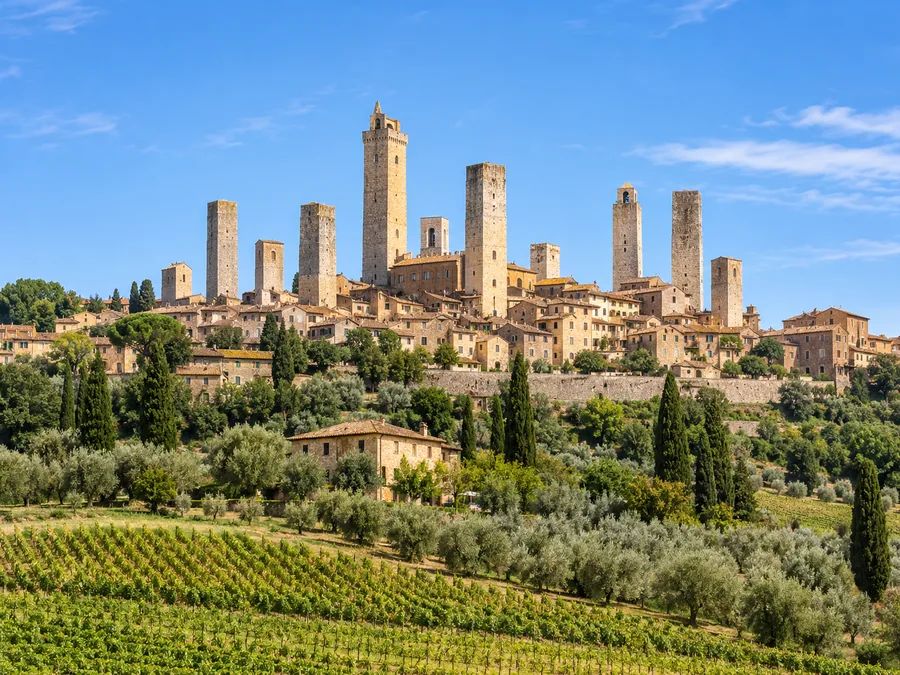
San Gimignano, Monteriggioni and Siena in one coach day from Florence, with lunch and three wines at a Chianti winery.
Explore the three-towns day Tour detailsWhich Chianti tours stop in the towns?
The full day stops in Greve, the tour from Siena in Castellina, and the sunset tour pauses at Greve and Montefioralle. Radda, Panzano and Gaiole are easiest by car or bus.
Here is what each listing names, town by town. The listings say itineraries are for reference and can change.
| Town | Known for | Tours that stop there |
|---|---|---|
| Greve in Chianti | Triangular square, market, September wine fair | Full day with lunch (free time); Sunset tour (photo stop); Pasta class (meets near Greve) |
| Montefioralle | Walled village above Greve | Sunset tour (photo stop) |
| Castellina in Chianti | The Rocca, Etruscan tombs | Chianti and castles from Siena |
| Panzano in Chianti | Castle walls, the Conca d'Oro | By car |
| Radda in Chianti | Palazzo del Podestà, Volpaia | By car, or the Autolinee Toscane bus |
| Gaiole in Chianti | Brolio, Meleto, L'Eroica | By car, or the Autolinee Toscane bus |
| Monteriggioni (not in the zone) | Walls and 14 towers | Tour from Siena; Wine and food tour (afternoon); Three-towns day (not November to March) |
| San Gimignano (not in the zone) | Towers, Vernaccia | Tour with San Gimignano; Three-towns day; Wine and food tour (morning) |
No train runs into the Chianti Classico hills; Trenitalia serves Florence and Siena. If you drive between the towns, Italy's legal limit is 0.5 g/l, and zero for drivers under 21 or in their first three years with a licence, under the Highway Code. On a tasting day, that is the strongest case for letting a tour do the driving. For the ways in from the city, see how to get from Florence to Chianti.
Frequently asked questions
What is the prettiest town in Chianti?
That is your call. For an arcaded square, Greve in Chianti; for views over the vineyards, Panzano; for a stone hill town, Radda in Chianti.
Which Chianti town is closest to Florence?
Of the main towns, Greve in Chianti, about 31 km south of Florence. San Casciano in Val di Pesa is the first Chianti town you reach coming from the north.
Can you visit the Chianti towns without a car?
Yes, on a tour, or on the Autolinee Toscane buses that link Florence with Greve, Radda and Gaiole. Check the timetable first; no train runs into the hills.
Is Siena in Chianti?
No. Siena is one of the two cities the Chianti Classico territory runs between, with Florence. Castellina and Radda in Chianti are each about 15 km from it.
Ready to book
Choose your tour
Free cancellation up to 24 hours before on every option. Prices are from-prices in USD and move with the season.
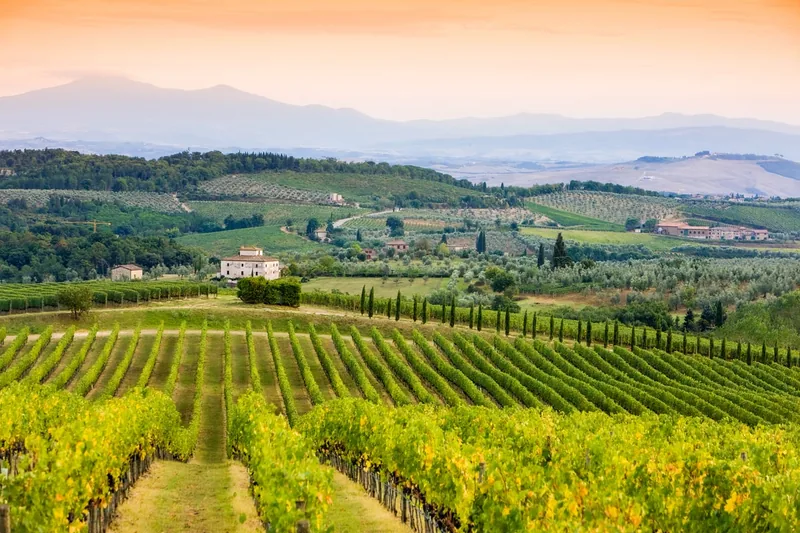
Small-Group Day to 3 Chianti Wineries with Lunch
- Air-conditioned vehicle with Wi-Fi
- English-speaking driver and guide
- Guided visits to 3 wineries
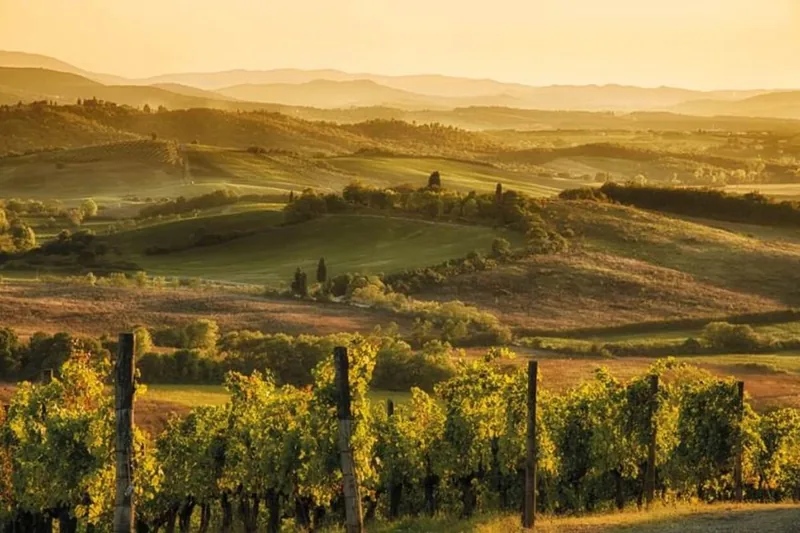
From Siena: Chianti and Castles Tour with Wine Tastings
Two wineries and the castle villages, starting in Siena
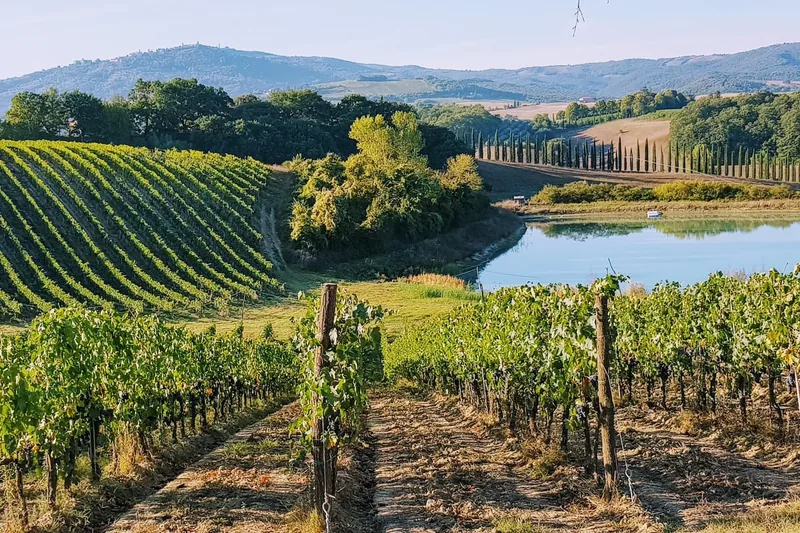
Chianti Wine Tastings at Sunset from Florence
Two vineyards and six wines in the evening light